
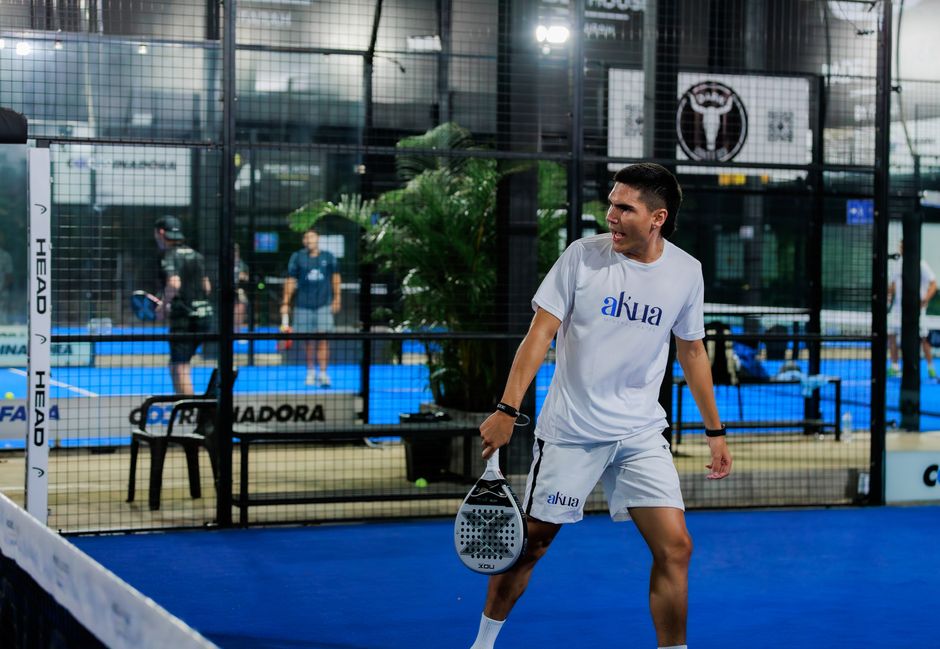
Padel courts have opened all over Jakarta and its surroundings, and many expats now play several times a week alongside tennis or badminton. Racket sports are great fun — but repeating the same swing hundreds of times puts a lot of load on a few small structures in the arm.
The three areas that complain most often are the elbow, the shoulder and the wrist.
Elbow: “tennis elbow”
Despite the name, you do not need to play tennis to get it. Tennis elbow is pain on the outside of the elbow, where the forearm muscles that extend the wrist attach. You may notice:
- pain when gripping, shaking hands or lifting a cup or a bag,
- pain when you hit a backhand,
- a weak or tired grip,
- tenderness on the bony point on the outside of the elbow.
Typical triggers are a sudden increase in playing time, gripping the racket too tightly, a racket that does not suit you, and a lot of backhands with a bent wrist.
Shoulder: overhead strokes
Smashes, serves and bandejas in padel load the shoulder in an overhead position. Pain on the front or side of the shoulder when you lift your arm, reach behind your back or sleep on that side is often related to irritation of the rotator cuff muscles and tendons.
Stiffness in the upper back and tight chest muscles can make the shoulder work harder than it should, so the problem is rarely just “in the shoulder”.
Wrist
Wrist pain in racket players is often linked to grip, repeated flicking shots and falls onto an outstretched hand. Overuse pain builds gradually; pain after a fall is different and needs more care (see below).
What you can do yourself
- Reduce playing time for a while instead of playing through pain.
- Warm up your shoulder, forearm and wrist before you play.
- Check your equipment: grip size and racket weight matter.
- Relax your grip between shots.
- Ice the painful area for short periods after playing if it helps.
- Consider a lesson with a coach — technique is often the real fix.
When to see a doctor first
Get a medical assessment before massage if:
- you fell on your hand and the wrist is swollen, very painful or deformed (a fracture can be missed),
- you cannot lift your arm at all after a fall or a sudden movement,
- there is significant swelling, redness or warmth,
- you have numbness or tingling in the hand,
- pain is getting worse despite rest.
How therapy can help
After the acute phase, manual therapy can help reduce muscle tension and improve how the arm moves. A typical session for a racket-sport complaint includes:
- Assessment of the painful area and the movements that trigger it.
- Treatment of the whole chain: for elbow pain the forearm and upper arm; for shoulder pain the shoulder, upper back, chest and arm.
- Advice on load and what to change before you play again.
Most overuse problems improve over a few sessions, combined with less load and better technique. If you are in East Jakarta, our Bekasi clinic is the closest option.
References
- NHS — Tennis elbow: https://www.nhs.uk/conditions/tennis-elbow/
- NHS — Shoulder pain: https://www.nhs.uk/conditions/shoulder-pain/
- NHS — Sprains and strains: https://www.nhs.uk/conditions/sprains-and-strains/