
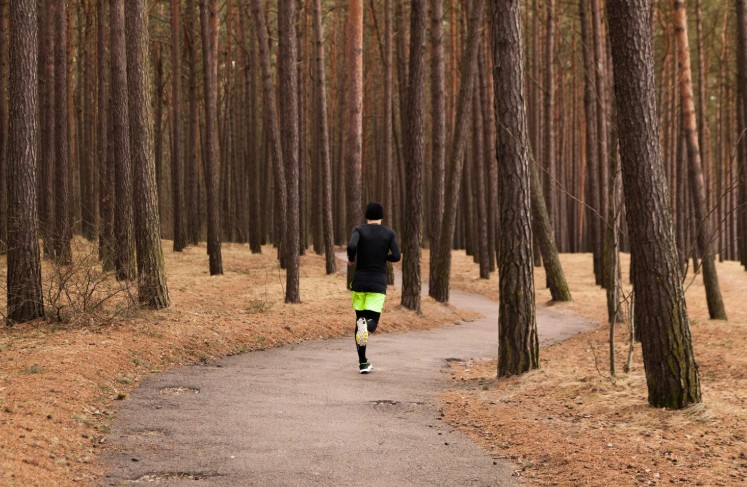
Running is one of the easiest sports to pick up in Indonesia — early-morning loops around the housing complex, Car Free Day on Sunday, trail runs in the hills above Bandung, or training for a city marathon. It is also a sport where small aches tend to be ignored until they stop you running altogether.
The two complaints we see most often in runners are pain around the knee and pain under the heel. Both usually come from load: too much, too soon, on tissue that is not ready for it yet.
Pain around the kneecap
Pain at the front of the knee, around or behind the kneecap, is very common in runners. It often feels worse:
- going down stairs or running downhill,
- after sitting for a long time with bent knees,
- when squatting.
Pain on the outside of the knee that builds during a run and then forces you to stop is another typical pattern. It is often linked to tight structures along the outside of the thigh and hip.
In both cases the knee is usually where you feel the pain, not the only place where the problem sits. Tight thigh muscles, weak hip muscles, a sudden jump in weekly distance, or a change of shoes can all increase the load on the knee.
Heel pain: plantar fasciitis
The plantar fascia is a thick band of tissue under the foot, from the heel to the toes. When it is overloaded you typically feel:
- sharp pain under the heel with your first steps in the morning,
- pain that eases after a few minutes of walking, then returns after standing or running for a long time,
- tenderness when you press under the front of the heel.
Tight calf muscles, a quick increase in running, hard surfaces, worn shoes and long hours on your feet are common contributing factors.
What you can do at home
For most overload problems, these simple steps help:
- Reduce, don’t necessarily stop. Cut distance and intensity to a level that does not make the pain worse the next day.
- Avoid the movements that clearly aggravate it for a while — for example downhill running or long runs.
- Ice a painful area for short periods if it helps, wrapped in a cloth.
- Calf stretches and gentle foot exercises often help heel pain.
- Check your shoes, especially if they have done a lot of kilometres.
- Return gradually. Increase your weekly load step by step once daily activities are comfortable again.
When to see a doctor first
Massage is not the right first step if:
- the knee locks, gives way or swells quickly after a twist or fall,
- you heard a pop and cannot put weight on the leg,
- the joint is red, hot and swollen, or you have a fever,
- pain is severe at night or does not improve after several weeks of rest,
- you have numbness or tingling in the foot.
These can point to a ligament or meniscus injury, a stress fracture, an infection or a nerve problem, and need a medical assessment.
How soft tissue therapy can help
Once acute swelling has settled, manual therapy can help you get back to running more comfortably. At Garuda Massage a session for a running complaint usually includes:
- Assessment of where it hurts, how it started and which movements trigger it.
- Treatment of the surrounding muscles, not only the painful spot — for knee pain this often means the thigh, hip and calf; for heel pain the calf and the sole of the foot.
- Advice on load, stretching and what to avoid until the next session.
Many runners feel a difference after the first session. Older or recurring problems usually need a few sessions, combined with smarter training.
References
- NHS — Knee pain: https://www.nhs.uk/conditions/knee-pain/
- NHS — Plantar fasciitis: https://www.nhs.uk/conditions/plantar-fasciitis/
- NHS — Sprains and strains: https://www.nhs.uk/conditions/sprains-and-strains/