
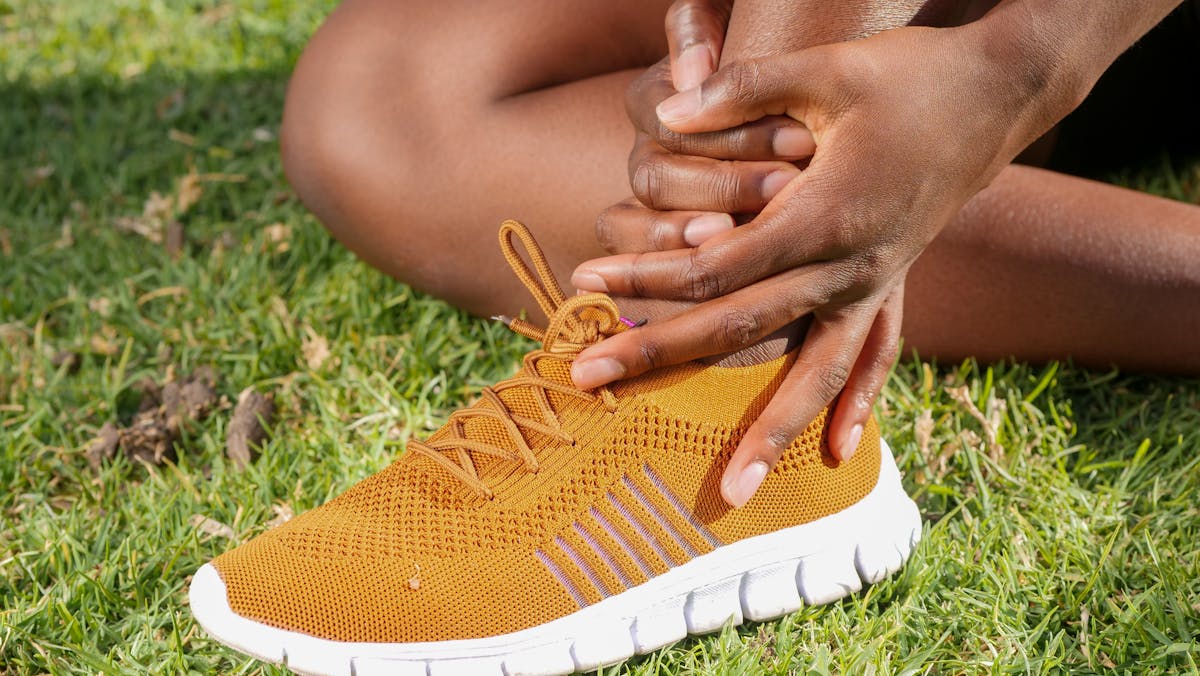
Uneven pavements, wet tiles, hiking trails, futsal and basketball: there are plenty of ways to roll an ankle. Most ankle sprains heal well, but a sprain that is not managed properly can leave the ankle stiff, weak and easy to injure again.
What happens in a sprain
When the foot rolls inwards, the ligaments on the outside of the ankle are overstretched or partly torn. You will usually notice pain, swelling and sometimes bruising. The muscles around the ankle also tighten up suddenly to protect the joint.
The first 2–3 days: protect and calm it down
In the first days the ankle is inflamed. Your goal is to support healing, not to disturb it. A common approach:
- Rest — avoid activities that hurt; use crutches if you cannot walk normally.
- Ice — 15–20 minutes every few hours, wrapped in a cloth, never directly on the skin.
- Compression — a supportive bandage, not too tight.
- Elevation — keep the foot raised, above the level of the heart if possible.
During this phase, avoid:
- massage on the swollen area,
- heat (hot packs, hot baths, sauna),
- pushing through walking or sport.
See a doctor if
- you cannot put weight on the foot or take four steps,
- there is pain when pressing on the bony points of the ankle or the outside of the foot,
- the ankle looks deformed,
- you have numbness, or the foot is cold or pale,
- swelling and pain do not start improving after a few days.
These can be signs of a fracture or a severe ligament tear. It is common for a fracture to be mistaken for a sprain.
After the swelling settles: where therapy helps
Once the acute swelling has gone down — often after the first week, depending on the severity — the ankle enters a repair phase. This is where manual therapy can be useful:
- Reducing tension in muscles that worked overtime while you were limping — the calf, shin, and sometimes the thigh and lower back.
- Improving ankle movement, which is often stiff after a sprain.
- Supporting a gradual return to walking, running and sport.
At Garuda Massage we do not treat an ankle that is still swollen and inflamed. We assess the ankle first and tell you honestly if it needs medical attention.
Prevent the next sprain
- Do balance exercises (standing on one leg, progressing to an unstable surface).
- Strengthen the calf and the muscles around the ankle.
- Return to sport gradually, and consider a brace or tape for the first weeks back.
References
- NHS — Sprains and strains: https://www.nhs.uk/conditions/sprains-and-strains/